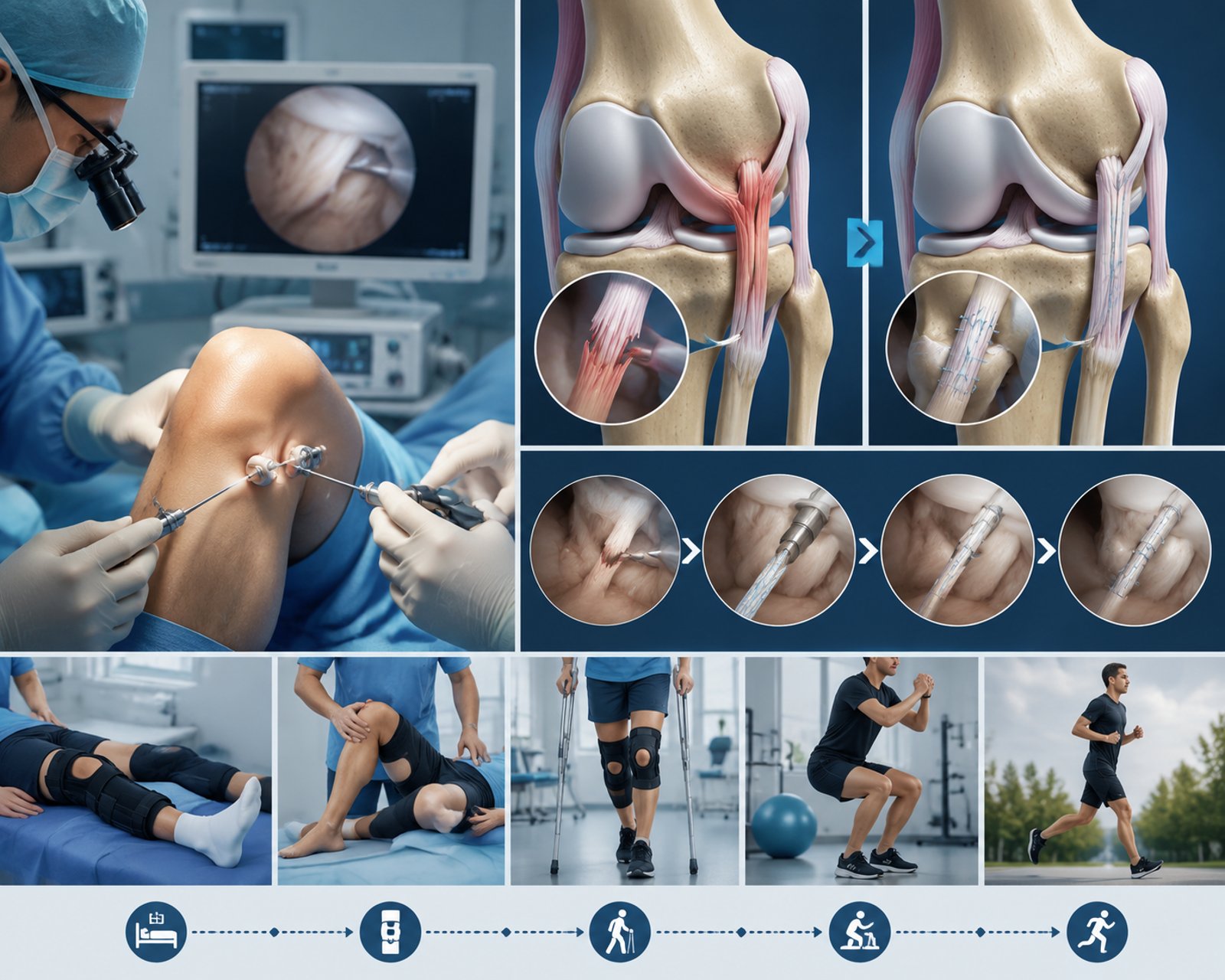
Understanding the MCL and Why Surgery Is Needed
The medial collateral ligament, or MCL, is a strong band inside your knee. It helps keep your knee stable. Sometimes, a sudden twist or blow can tear the MCL. While many MCL injuries heal with rest, some severe tears need MCL surgery. This operation repairs or rebuilds the ligament. As a result, your knee can regain strength and movement. Doctors may suggest surgery if the ligament is badly damaged or if other treatments do not work.
Symptoms and Diagnosis Leading to MCL Surgery
Often, people with an MCL injury feel pain on the inner side of the knee. Swelling, bruising, and trouble walking are also common. Sometimes, the knee may feel loose or unstable. If these symptoms do not improve, your doctor may order tests. For example, an MRI or X-ray can show how much the ligament is torn. After reviewing the results, your doctor will decide if MCL surgery is the best option.
Overview of the MCL Surgery Procedure
MCL surgery is usually done by an orthopedic surgeon. Most often, the operation takes one to two hours. During the procedure, the doctor repairs or replaces the torn ligament. Sometimes, they use stitches to sew the ligament back together. In other cases, a piece of tissue from another part of your body helps rebuild the ligament. After surgery, you may wear a knee brace to keep the joint steady. Most people go home the same day.
Recovery Timeline and What to Expect After Surgery
Recovery from MCL surgery takes time. However, most people start moving their knee within a few days. Here is a general timeline:
Every person heals at a different pace. Therefore, always follow your doctor’s advice for the best results.
Tips for a Smooth and Successful Recovery
Following your care plan is key to a good recovery. Here are some helpful tips:
Additionally, let your doctor know if you notice redness, fever, or severe pain. These could be signs of infection or other problems.
Preventing Future MCL Injuries
After MCL surgery, you can take steps to protect your knee. For example, always warm up before exercise. Use proper techniques during sports. Also, wear the right shoes for your activity. Building strong leg muscles helps support your knee. If you play contact sports, consider using a knee brace for extra safety. Most importantly, listen to your body and avoid pushing through pain.
Conclusion
MCL surgery can help restore knee strength and stability. With the right care, most people recover well and return to their favorite activities. However, every recovery is unique. Consult an orthopedic specialist Dr. Gopal Chandra for personalized advice on MCL surgery and recovery.