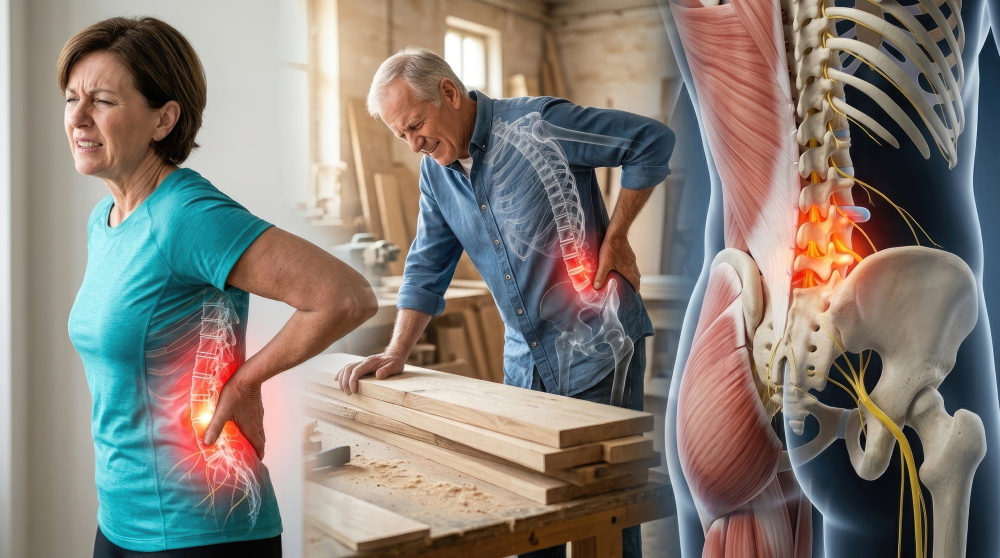
Many people wonder about the difference between slip disc and muscle strain. Knowing how to tell slip disc from muscle strain is important. Both can cause back pain, but they need different care. If you know the signs, you can get the right help and avoid more problems. This guide explains slip disc vs muscle strain, their symptoms, causes, and treatments. Understanding these conditions helps you make better choices for your health.
What Is a Slip Disc?
A slip disc, also called a herniated disc, happens when a soft cushion between the bones in your spine moves out of place. This can press on nearby nerves. As a result, you may feel pain or numbness. The spine has many discs, and any of them can slip, but it often happens in the lower back.
Common Symptoms of a Slip Disc
Main Causes and Risk Factors
What Is a Muscle Strain?
A muscle strain means a muscle or its tendon has been stretched or torn. This often happens when you lift something heavy or move suddenly. Muscle strains are common in the back, neck, and legs. They usually heal with rest and care.
Typical Symptoms of Muscle Strain
Main Causes and Risk Factors
Key Differences Between Slip Disc and Muscle Strain
It can be hard to know which problem you have. However, some signs can help you tell the difference between slip disc and muscle strain.
Feature Slip Disc Muscle Strain Pain Type Sharp, shooting, may travel down leg or arm Aching, sore, stays in one area Numbness/Tingling Common Rare Muscle Weakness Possible Uncommon Pain With Movement Worse with certain moves, coughing, or sneezing Worse with using the muscle Affected Area Spine, nerve pathways Muscle only
For example, slip disc pain often travels down the leg or arm. In contrast, muscle strain pain stays in one spot. Also, numbness and tingling are more common with a slip disc. Movement may make both worse, but the type of pain feels different.
Diagnosis
Doctors use several steps to find out if you have a slip disc or muscle strain. First, they ask about your symptoms and how the pain started. Next, they do a physical exam. They may check your strength, reflexes, and feeling in your arms or legs.
Sometimes, doctors use imaging tests to help. These include:
In many cases, a careful exam is enough. However, if symptoms are severe or last a long time, imaging helps find the exact cause.
Treatment Options
Slip Disc Treatment
Muscle Strain Treatment
For both conditions, you should see a doctor if:
Prevention and Lifestyle Guidance
Preventing slip disc and muscle strain is possible with a few simple steps. For instance, keeping your back strong and flexible helps. Good posture also lowers your risk.
Additionally, avoid sudden twisting or heavy lifting. If you are unsure about safe exercises, ask a doctor or physical therapist. These steps can help you stay active and lower your risk of back problems.